Knowing yourself is hard but worthwhile
On consciousness, choice, and what it means to live by design

A few years ago, I started noticing a pattern in my behavior that unsettled me. I was saying yes to things I didn’t want to do — not just occasionally, but habitually. Before I knew it, I was faced with professional commitments that didn’t align with my work, social obligations that drained rather than nourished me, and small daily choices that, when I paid attention, ran counter to what I claimed to value.
The dissonance was subtle enough that I could ignore it most of the time. But in quieter moments — during meditation, long walks, or in that space between sleep and waking — I felt it. It was this low-grade hum of misalignment, a sense that my life was unfolding to me rather than through me.
When I paused long enough to ask why, the answer was uncomfortable: I didn’t actually know myself as well as I thought I did. I knew my resume. I knew my habits. I knew what other people thought of me. But the deeper architecture of my actual values, my genuine needs, the vision I held for my life was unclear. I’d been making decisions based on external expectations and internalized “shoulds” rather than any coherent sense of who I was and who I wanted to become.
This led me to a parallel observation: Most people don’t really know themselves. Most individuals and collectives alike float through the world somewhat unconscious of who we are, what we value, how we want to show up, what we genuinely need, and what vision we’re building toward (if we have articulated a vision at all).
Stuff happens. Life unfolds. Decisions get made. But all without much intention or reflection.
The cost of unconsciousness
There’s a kind of autopilot mode we can operate in for years (even decades) without realizing it. We make choices based on what seems expected, what feels familiar, what worked before, what other people are doing. We react to circumstances rather than creating from intention. We optimize for comfort or approval or efficiency without interrogating whether those are the things we care about most.
Most of us aren’t willfully ignorant, avoiding self-knowledge. The work of knowing yourself is difficult and requires creating space for reflection in a world that demands constant motion. It takes honest investigation into things we’d sometimes rather not see. It means distinguishing between who we are and who we think we should be, between what we want and what we’ve been conditioned to want.
And there’s a strange paradox at the heart of it: we can be intimately familiar with our preferences, our patterns, and our personality without actually knowing ourselves in any deep way. We know what we do without understanding why we do it. We know how we feel without recognizing what we truly need. We know what we’ve achieved without clarity about what we’re building toward.
Operating from this place of partial self-awareness, life end up happening to you. Opportunities arise and you take them or don’t you don’t take them, but not based on any coherent framework. Relationships form based on proximity and circumstances. Your time gets allocated to whoever asks loudest or whatever seems most urgent. You can look back at the last five years and struggle to articulate what it was all in service of.
What changes when you know yourself
When you do know yourself, you’re more likely to live your values, meet your own needs, have relationships that are fulfilling, and move toward a vision for your life that you’re proud of.
Knowing myself hasn’t made life easier or eliminated difficult choices, but with this knowledge, I have been more able to make decisions throughout my life that live within the boundaries of who I want to be.
This creates a different kind of agency. Instead of reacting to whatever comes at me, I have a framework for discernment. Instead of saying yes because I can’t think of a reason to say no, I say yes or no based on what resonates with me. Instead of waiting to see what life brings, I begin to create and invite in what aligns with my vision of who I most want to be.
I don’t always get it right, but there’s a qualitative difference between losing my footing and not knowing where I stand in the first place.
The parallel in organizations
I’ve been thinking about how this same dynamic plays out at the organizational level, particularly with the companies I work with. Most organizations — like most people — don’t really know themselves.
They can tell you what they do, what they sell, who their customers are. They can show you their mission statement and their values poster. They might even be able to articulate their market positioning. But when you dig deeper, the clarity dissolves.
Ask how those stated values shape daily decisions and you’ll often get vague answers or examples that contradict the values themselves. Ask what they stand for beyond revenue growth and market leadership, and the conversation becomes abstract. Ask what they’re willing to not do in service of their identity and you’ll encounter discomfort. Boundaries feel like limitations rather than expressions of self-knowledge.
This isn’t a moral failing. Like individual self-knowledge, organizational self-knowledge is hard work that relies on space for reflection. It demands a level of honesty about gaps between aspiration and reality that most organizations don’t want to face. In cultures that reward constant execution, finding that space is really tough.
Just like with individuals, organizations can operate for years on autopilot without any coherent sense of identity guiding their choices. Strategy becomes reactive rather than generative, and by default, their brand becomes whatever the market makes of it rather than something created with intention.
Living by design vs. living by default
There’s a question I’ve started asking myself: Am I living by design or by default?
Living by default is accepting whatever circumstances present to you. You make decisions based on what’s easiest or most expected rather than what’s most aligned. You let your days fill with other people’s priorities because you haven’t clarified your own. A year (or more) may pass you by where you struggle to see the through-line, the intentionality, the you-ness of how it unfolded.
In contrast, when you live by design, you make active choices rooted in self-knowledge. You create boundaries that protect what matters most to you, even when those boundaries are inconvenient, and you build a life, relationships, work, and daily practices that reflect who you actually are and who you’re becoming, rather than who circumstances or others expect you to be.
Of course, you’re not going to have everything figured out. Life is too complex, too unpredictable, too relationally interdependent for that. Living by design doesn’t mean eliminating surprise or spontaneity or the beautiful accidents that shape us. It means having enough self-knowledge that when you encounter the unexpected, you can respond from a grounded place rather than just reacting.
For organizations, the parallel question is equally revealing: Is your company being created by design or by default?
When revenue becomes the primary driver without a deeper sense of organizational identity guiding it, you end up making choices that might hit quarterly targets but slowly erode any coherent sense of who you are. You chase whatever market opportunity presents itself. You shift positioning based on what’s working for competitors. You say yes to partnerships or initiatives that make financial sense but don’t make identity sense. Over time, your brand becomes an accumulation of tactical decisions rather than an expression of something intentional.
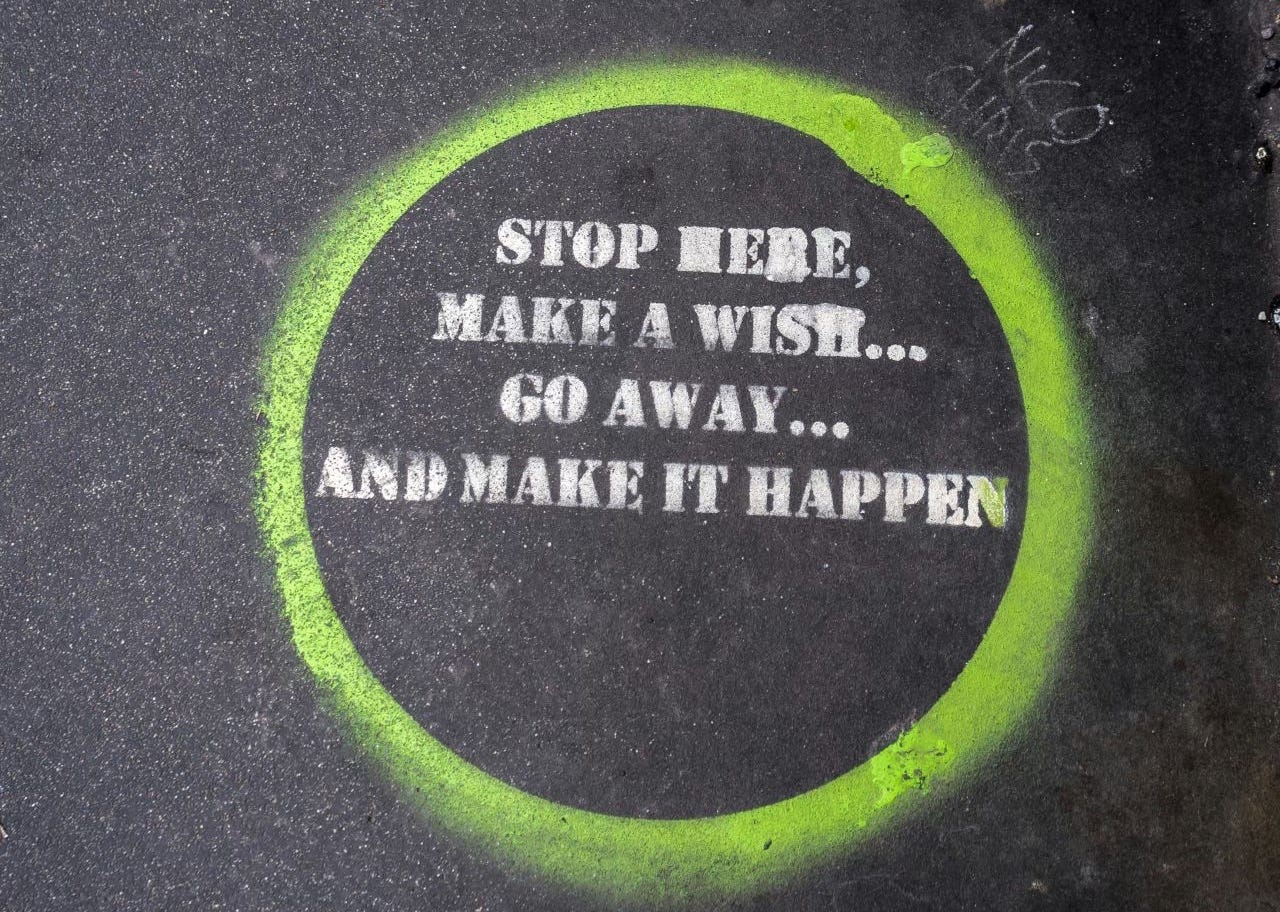
It’s better to make it happen than to let it happen
I won’t deny that some beautiful things happen by accident, and noticing those happy accidents can bring you joy and satisfaction and wonder unparalleled by only paying attention to the strategy in front of you. But as a rule, building a life (or an organization) you’re proud of requires more than hoping things work out.
When I think about the misalignment I felt a few years ago — that low-grade hum of dissonance — it’s quieter now. Not gone, but quieter. Because I’ve done some of the work of knowing myself more deeply. And that self-knowledge creates a different quality of choice, a different relationship with my own life.
It’s still hard. The work of self-knowledge is ongoing, not a destination. But it’s worth it. Because the alternative is harder in the long run, it’s just harder in a way we don’t always notice until we pause long enough to feel the dissonance.
Well put, Samantha. Exploring the unconscious, both as an individual and an organization, is challenging. Our unconscious is a vast collection of hidden desires, fears, memories, and conflicts neatly tucked away and silently shaping our behavior. Tricky to understand, but worth the effort if we want to get past the "low-grade hum of misalignment" between who we think we are and reality.